
Who Is Responsible When Your Car's Safety' Features Fail?
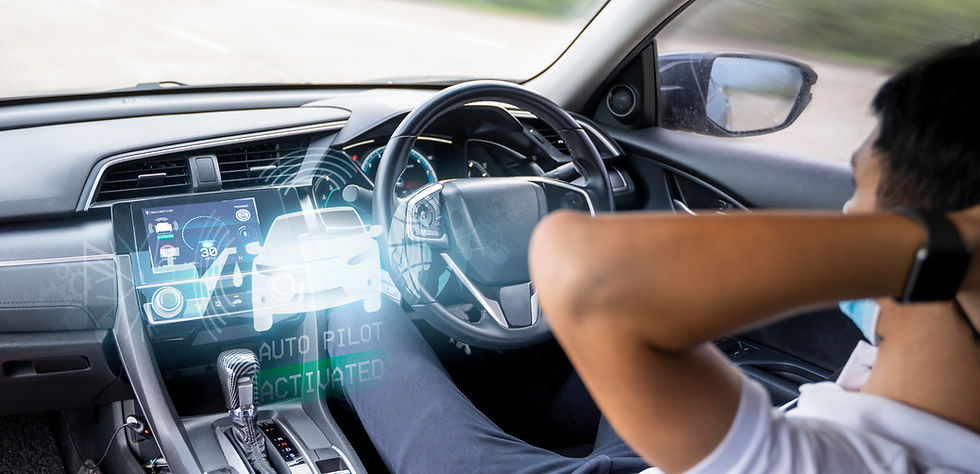
Nearly every new vehicle sold in America today comes equipped with some form of Advanced Driver Assistance System, commonly referred to as ADAS. These systems include automatic emergency braking, lane departure warnings, lane-keeping assist, adaptive cruise control, blind-spot monitoring, and forward collision warnings. Automakers market these features aggressively, often using language that implies the car can drive itself or that the technology will prevent accidents from happening. But these systems are not infallible, and when they fail, the legal question of who is responsible for the resulting collision is far more complicated than it would be in a traditional car accident case.
The NHTSA has been collecting crash data involving vehicles equipped with ADAS and fully autonomous driving systems under a Standing General Order that requires manufacturers and operators to report certain crashes. Through November 2025, the agency recorded over 5,200 incidents involving vehicles with automated driving features, resulting in more than 450 injuries and fatalities. Tesla has reported the highest number of ADAS-related crashes of any manufacturer. In one closely watched case in 2025, a federal jury found Tesla 33% at fault for a collision, concluding that the design of its Autopilot system and the adequacy of its warnings contributed to the crash.
The core legal issue in ADAS failure cases is the allocation of fault among the driver, the vehicle manufacturer, and potentially other parties. Traditional car accident litigation is straightforward in this respect: the driver who ran the red light or failed to stop in time is at fault. But when a vehicle's automatic emergency braking system fails to activate, or when a lane-keeping system steers the car into an adjacent lane, or when adaptive cruise control fails to detect a stopped vehicle ahead, the question becomes whether the crash was caused by the driver's inattention, the technology's failure, or some combination of the two.
Under California's product liability law, a manufacturer can be held strictly liable for injuries caused by a defective product, regardless of whether the manufacturer was negligent. This framework applies directly to ADAS technology. If an automatic braking system was designed in a way that fails to detect certain types of obstacles (a design defect), or if a particular unit's sensors were improperly calibrated during manufacturing (a manufacturing defect), or if the owner's manual and dashboard warnings did not adequately explain the system's limitations (a failure to warn), the manufacturer may be liable for injuries that result. The injured person does not need to prove that the automaker cut corners or acted unreasonably; the injured person needs to prove that the product was defective and that the defect caused the harm.
One of the more troubling aspects of ADAS litigation is the role of overreliance. Automakers promote these systems as safety features that will protect you, and then, when the systems fail and someone is injured, those same automakers argue that the driver should have been paying closer attention and should not have trusted the system. There is a deep tension in marketing a product as capable of preventing collisions while simultaneously disclaiming responsibility when it fails to do so. Courts and juries are beginning to recognize this tension, and the legal landscape is shifting in favor of holding manufacturers accountable for the expectations their marketing creates.
Liability does not always stop with the automaker. Dealerships that sell vehicles with known ADAS defects or fail to perform required software updates may be independently liable. Repair shops that perform windshield replacements, bumper repairs, or other bodywork without properly recalibrating the ADAS sensors can create dangerous conditions that lead to system failure. A forward-facing camera mounted behind the windshield, for example, must be precisely calibrated after a windshield replacement. If a repair shop skips that step or performs it incorrectly, the automatic braking system may not function at all, or it may activate at the wrong time. The vehicle owner, who had every reason to believe the repair was performed correctly, may have no idea that the safety system is compromised until a collision occurs.
For anyone involved in a car accident where ADAS technology may have played a role, the preservation of evidence is critically important. Modern vehicles record enormous amounts of data through event data recorders (sometimes called "black boxes") and through the ADAS systems themselves. This data can reveal whether the automatic braking system detected the obstacle, whether the lane-keeping system was engaged, what inputs the driver provided in the seconds before impact, and whether any system warnings were displayed. If this data is not preserved quickly, it can be overwritten or lost. In any collision where a vehicle's automated features may have contributed to the crash, obtaining a forensic download of the vehicle's data should be an immediate priority.
The law in this area is evolving rapidly, and courts across the country are working through the novel questions that ADAS technology presents. As these systems become more sophisticated and more prevalent, and as consumers place increasing trust in technology that automakers encourage them to trust, the frequency and complexity of ADAS-related injury claims will only increase.
If you have been involved in a collision and believe that your vehicle's safety technology failed to perform as expected, or that another driver's ADAS-equipped vehicle malfunctioned, those facts deserve serious legal evaluation. CONTACT PHILLIPS & ASSOCIATES TODAY for a free consultation today at (818) 348-9525. You will immediately be put in touch with John Phillips or Patrick DiFilippo, who can help determine whether you have a case and advise you on the best course of action moving forward.


Comments