
Who's Watching the Automakers? What Federal Safety Cuts Mean for California Drivers
- Mar 17
- 4 min read

Americans tend to take for granted that someone is watching the automakers. When a dangerous part makes it into millions of vehicles, we assume a federal agency will find it, investigate it, and compel a recall before too many people get hurt. That assumption has always rested on the capacity of the National Highway Traffic Safety Administration, the federal agency responsible for investigating vehicle defects, establishing safety standards, and forcing manufacturers to take corrective action when their products endanger the public. As of 2025, that capacity has been significantly and deliberately reduced.
Over the course of 2025, NHTSA lost more than 25 percent of its workforce through a combination of buyouts, terminations of probationary employees, and forced early retirements under the Trump administration's cost-cutting initiative. The agency shrank from approximately 780 employees to roughly 555, and the cuts extended to the Federal Highway Administration and Federal Transit Administration as well. The broader Department of Transportation lost more than 4,100 employees in total during the same period, dropping from nearly 57,000 workers to approximately 52,800. Representative Rick Larsen, the top Democrat on the House Transportation Committee, expressed immediate concern about how the agency could continue fulfilling its safety mission with a decimated workforce, asking publicly how the DOT could "advance safety" under these conditions.
What NHTSA does, on a practical level, is something most people never see but depend on entirely. The agency opens investigations when consumer complaints suggest a pattern of dangerous vehicle behavior, demands technical data from manufacturers, and orders recalls when defects are confirmed. It also sets the federal safety standards that every vehicle sold in the United States must meet, and in rare cases it forces a recall over a manufacturer's explicit objection. At the moment the cuts were implemented, NHTSA had approximately 33 open investigations, more than 20 of which had been opened in 2025 alone, covering everything from defective backup camera systems to partial driving automation failures to the ongoing ARC Automotive airbag inflator crisis affecting an estimated 51 million vehicles.
The timing of these reductions is especially problematic given where vehicle technology is heading. The majority of NHTSA's currently open recalls involve software logic rather than hardware failures, including brake assist systems, autonomous driving perception software, and airbag controllers that rely on sophisticated electronic triggers. Modern vehicles are, in many respects, rolling software platforms, and the safety defects they generate require engineers who understand both the hardware and the underlying code. Investigating a defective automatic emergency braking algorithm is a fundamentally different task from investigating a cracked ball joint, and it requires specialized expertise that cannot be quickly rebuilt once it is gone.
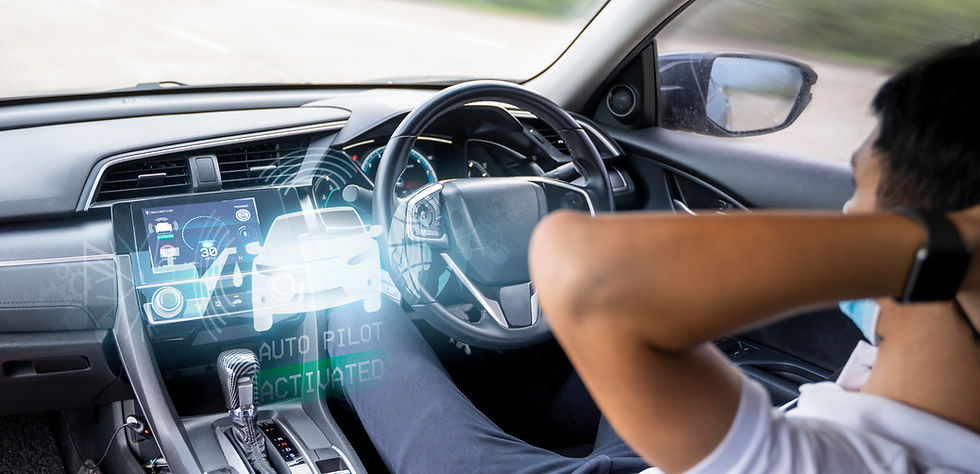
The stakes are even higher in the autonomous vehicle space. NHTSA currently has open investigations involving Tesla's Autopilot and Full Self-Driving features, Waymo's driverless operations, and other companies testing advanced driving systems on public roads. These are not theoretical inquiries; they arise from actual crashes, some of them fatal. The Trump administration has made the acceleration of autonomous vehicle deployment a stated policy priority, and new DOT Secretary Sean Duffy announced in April 2025 a framework designed specifically to reduce regulatory friction for AV companies. What remains unanswered is who ensures that speed doesn't come at the cost of safety, when the agency charged with that responsibility has lost a quarter of its people.
The funding situation adds another dimension of uncertainty. NHTSA's dedicated federal funding authorization expires on September 30, 2026, meaning the next Congress must reauthorize the agency's operations, roles, and budget essentially from scratch. The House Appropriations Committee advanced a Fiscal Year 2026 spending bill that would cut NHTSA's operations and research account by more than $10 million and eliminate nearly $78 million in supplemental infrastructure funding the agency had been receiving since 2021. A coalition of consumer and public health organizations, led by Consumer Reports, urged Congress to reject those cuts, warning that the agency cannot fulfill its mission of reducing the still-staggering number of highway deaths with fewer investigators and a shrinking budget.
For California drivers, this matters in concrete, practical terms. California's strict product liability law allows an injured person to hold a manufacturer responsible for a defective vehicle without proving that the company was negligent; proof of the defect and causation is sufficient. Those claims are far more powerful, however, when they are supported by federal investigation records, internal NHTSA correspondence, and recall orders that document exactly what the manufacturer knew and when. A weakened NHTSA that opens fewer investigations, moves more slowly on manufacturer pushback, and lacks the engineering staff to effectively challenge corporate technical objections produces fewer of those documents. The downstream effect is that injured Californians have less evidence to work with, and the corporations that sold them dangerous vehicles face less accountability, at both the regulatory and the civil level.
The most practical step any California driver can take is to regularly check NHTSA's recall database at nhtsa.gov/recalls using your Vehicle Identification Number, a process that takes less than two minutes and can tell you whether your vehicle is subject to any outstanding recall. If a recall exists, schedule the free repair promptly, and document in writing that you did so. Beyond that, take note of any unusual vehicle behavior, including unexpected braking, lane-keeping system failures, or airbag warning lights, and bring those issues to your dealer's attention in writing rather than verbally, so that a record exists. If you are ever in an accident where a vehicle component behaved unexpectedly or a safety system failed entirely, preserve the vehicle in its post-accident condition and consult a personal injury attorney before allowing the car to be repaired or released. In a regulatory environment where oversight is being deliberately weakened, the burden of protecting yourself shifts more heavily onto each individual driver.
CONTACT PHILLIPS & ASSOCIATES TODAY
If you or a loved one has been injured in an auto accident, contact Phillips & Associates at (818) 348-9515 for a free consultation today. You will immediately be put in touch with John Phillips or Patrick DiFilippo, who can help determine whether you have a case and advise you on the best course of action moving forward.


Comments